
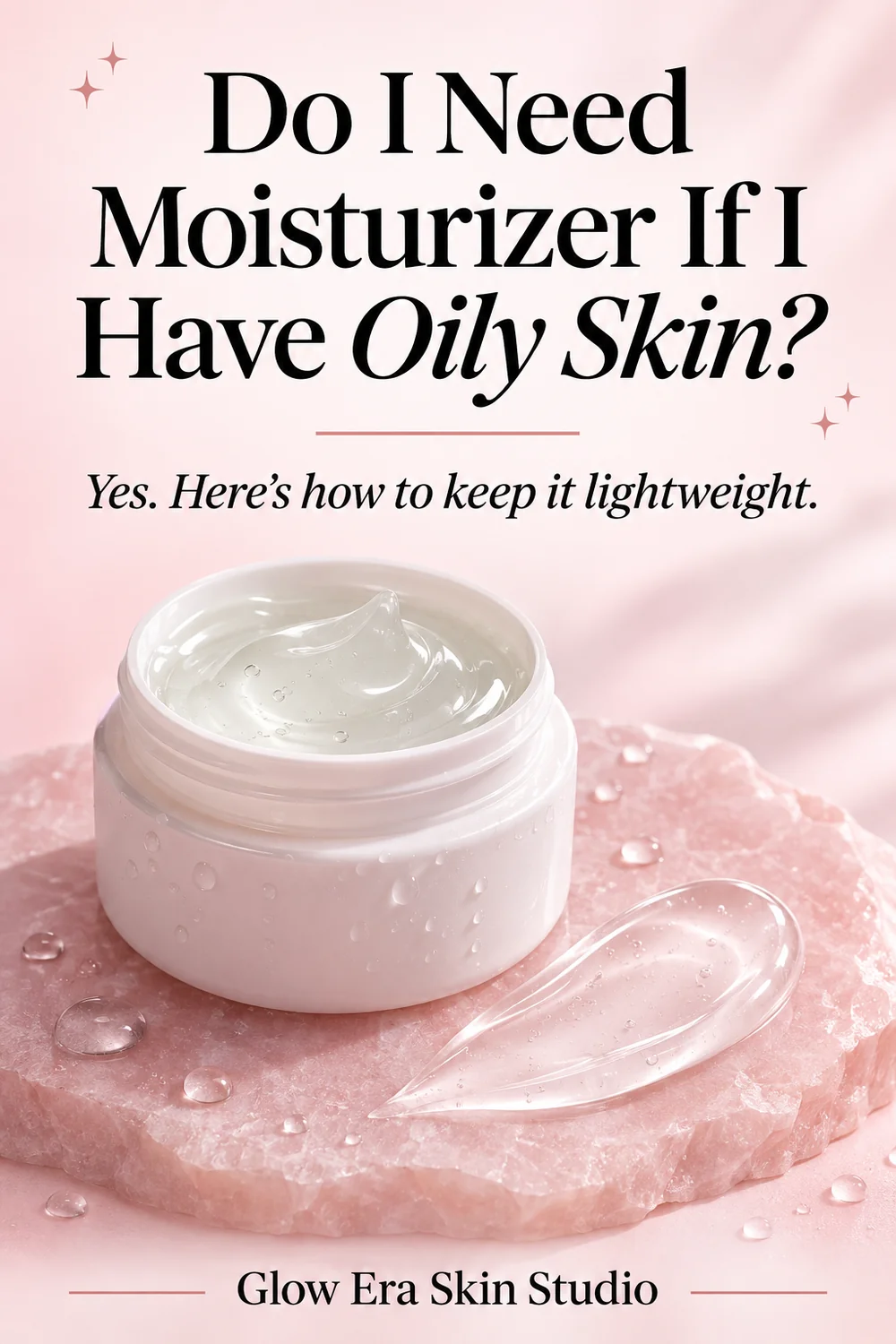
Yes, oily skin still benefits from moisturizer. A lightweight formula can help keep your skin comfortable without the heavy feeling you may associate with face cream.
I’m Jenn, I’m 40 years old, and I share simple, affordable skincare here at Glow Era Skin Studio. I struggled with acne for years, and I’m now happy with my skin.
I started this blog because skincare can get confusing fast. My aim is to explain everyday steps, like moisturizer, in a way that makes choosing your routine feel easier.

If your face gets shiny by lunchtime, adding another layer might feel like the last thing you want to do. The answer is to choose a texture that suits you and fits your routine.
You do not need to buy the richest cream, follow a long routine, or accept a greasy finish. Start with a simple moisturizer and pay attention to how your skin responds.
Why oily skin can still need moisture
Skin oil and skin hydration are related, but they are not the same thing. A shiny surface does not tell you everything about how comfortable or well-hydrated your skin is.
Moisturizers help support the outer layer of the skin through a combination of ingredients. Some attract water, some soften the surface, and some help reduce water loss.
The goal is to moisturize your skin without making your routine feel heavy. That is a product-selection problem, rather than a reason to rule out the whole category.
Think about your actual experience: does your face feel comfortable after cleansing, or does it feel stretched while still looking shiny in certain areas?
What dermatologists recommend for oily skin
The American Academy of Dermatology recommends moisturizing after cleansing, even for people with oily skin. Its oily-skin guidance also emphasizes gentle cleansing rather than aggressively drying the face.
That does not mean moisturizer is a treatment for every cause of oiliness or every breakout. It is one part of a routine that should suit your skin as a whole.
You can still use blotting papers for daytime shine if you find them helpful. There is no need to restart your entire cleansing routine every time your forehead looks oily.
How to choose a moisturizer for oily skin
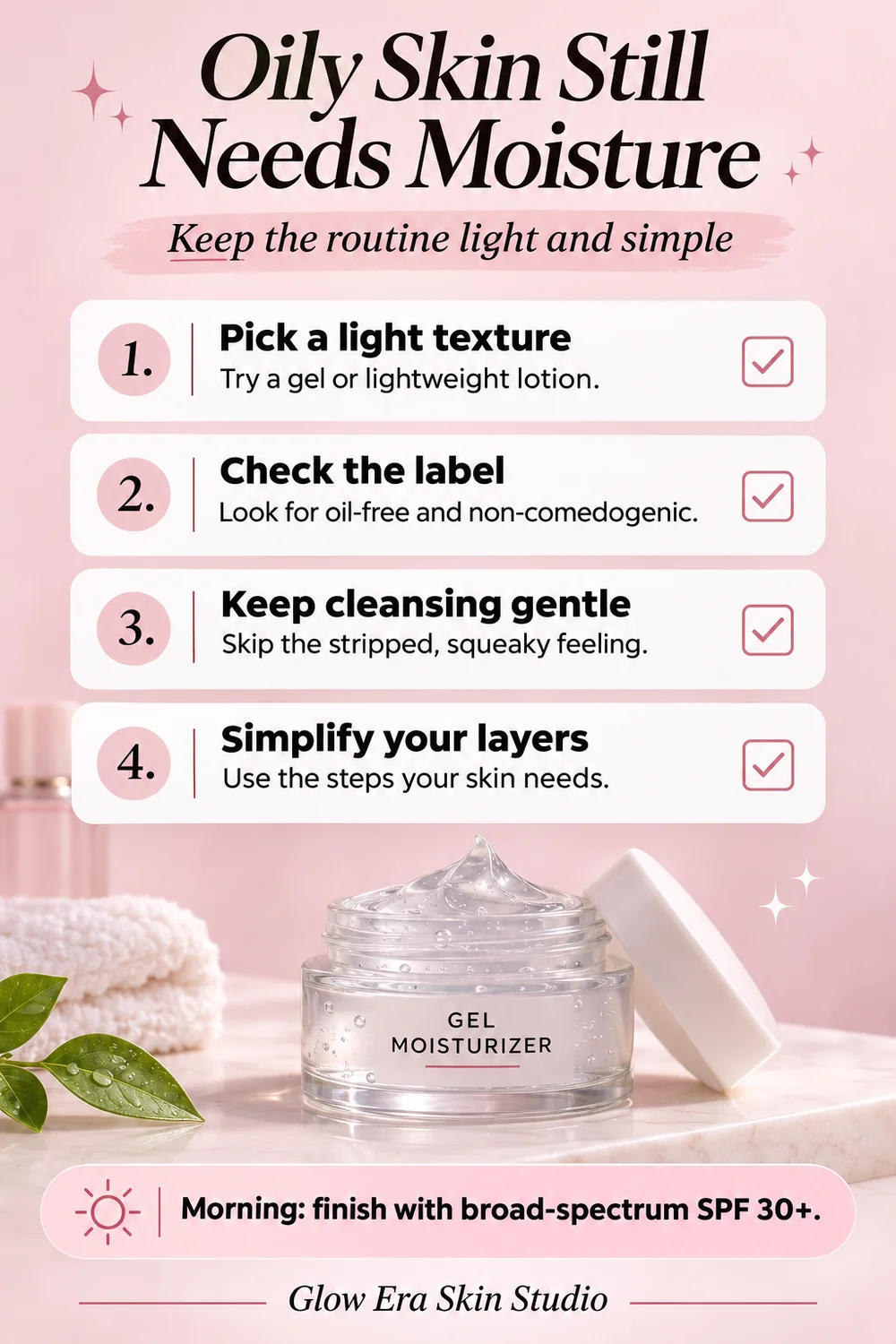
Start by looking for a light lotion or gel. These textures may be easier to wear if a thick cream feels uncomfortable under sunscreen or makes you want to skip moisturizing.
For acne-prone skin, labels such as “oil-free” and “non-comedogenic” are useful starting points. They can help narrow the shelf, although individual skin responses still vary.
Choose fragrance-free products if you are sensitive to fragrance or your skin feels irritated. There is no requirement for your moisturizer to smell luxurious to do its job.
You do not need an expensive moisturizer to build a good routine. A comfortable product you can afford to repurchase is a practical place to start.
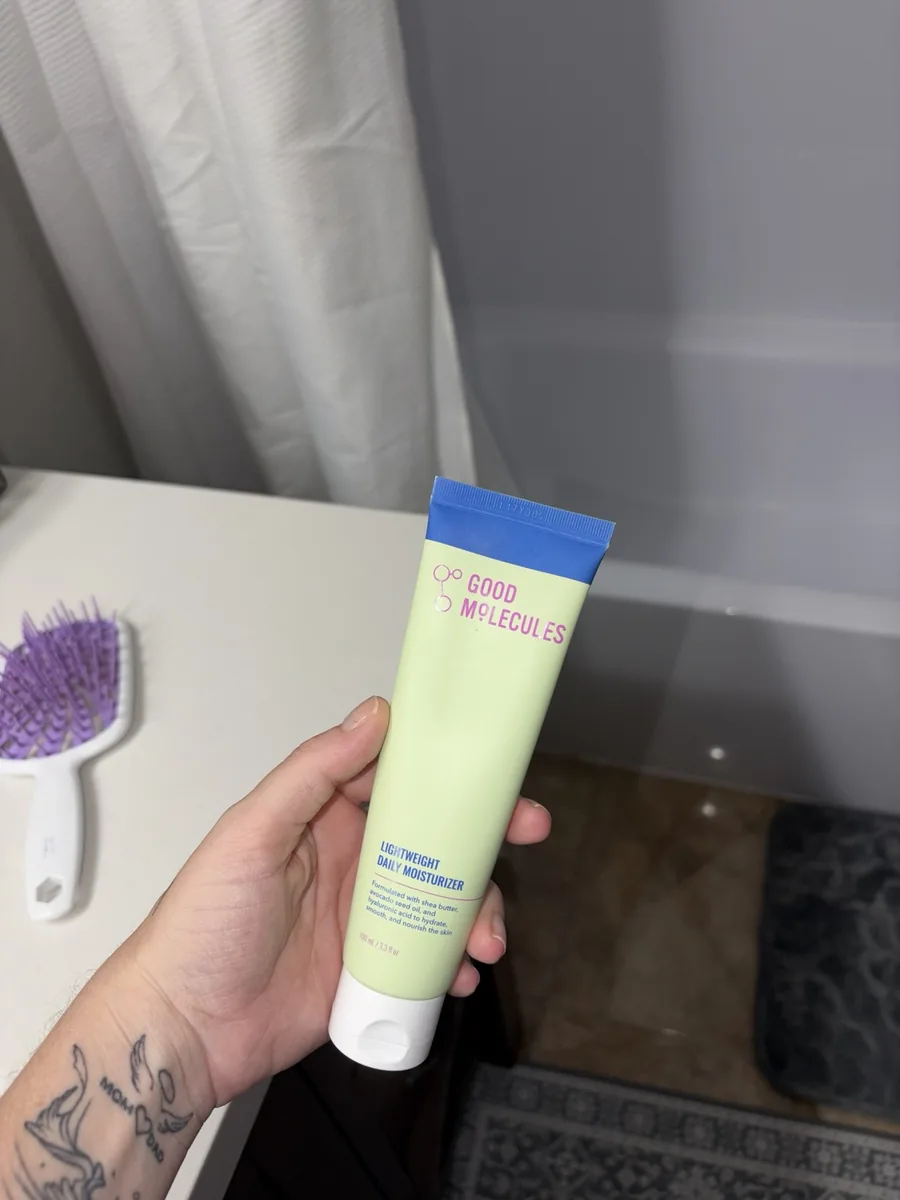
Ingredients do not need to become homework
You may see glycerin or hyaluronic acid in moisturizing formulas. These are examples of humectants, which help attract water.
Other ingredients help soften the skin or limit water loss. A finished moisturizer can combine these functions in one formula, so a single ingredient does not tell the whole story.
If comparing ingredient lists becomes overwhelming, return to three questions: does it suit your skin, feel comfortable, and fit your budget? You do not need a trending ingredient checklist.
Buying a separate serum for every moisturizing ingredient is optional. Start with the basic product before deciding whether your routine needs another layer.
What if moisturizer makes my face feel greasy?
First, separate the feeling of the product from the appearance of your skin later in the day. Does it feel heavy immediately, or are you noticing your usual afternoon shine?
If it feels heavy right away, try a lighter texture and follow the product’s directions for application. Give each layer a chance to settle before deciding whether the combination works.
If you are layering a hydrating toner, serum, moisturizer, and moisturizing sunscreen, review whether you enjoy every step. You may prefer fewer layers in the morning.
A routine can be simple and still include moisture. Keep the steps that serve a purpose for your skin instead of adding products because they appear in someone else’s routine.
Can sunscreen replace morning moisturizer?
Sometimes a moisturizing sunscreen provides enough comfort on its own. A separate moisturizer underneath is optional if your skin feels comfortable without it.
AAD guidance supports choosing a moisturizer with broad-spectrum SPF 30 or higher as a combined morning option. Use the labeled amount and follow reapplication directions.
Do not reduce your sunscreen amount to make the finish less shiny. If you dislike how it feels, consider a formula you find easier to wear rather than applying too little.
This choice may look different at night, when you are no longer relying on that sunscreen layer. Judge the morning and evening routines separately.
If your layers start rolling into little flakes, my guide to sunscreen pilling explains what to check.
A simple routine for oily skin
In the morning, use a gentle cleansing approach that suits your skin, then apply moisturizer if needed and sunscreen. You can choose a combined moisturizing sunscreen when that works well for you.
At night, remove the products you wore, cleanse gently, and moisturize. If you use an acne treatment, follow its directions or your clinician’s instructions for where it fits.
You do not need to add an exfoliating toner, drying mask, or extra wash just because your skin is oily. Each additional product should have a clear reason to be there.
For a step-by-step example, see my morning and night skincare routine. Use it as a structure you can adapt, rather than a shopping list you need to copy.
Moisturizer matters when acne treatments cause dryness
Benzoyl peroxide, salicylic acid, and retinoids can leave skin dry or irritated. The AAD explains that moisturizer can help people tolerate drying acne treatments.
You can have breakouts and still need help with dryness. Making your face feel increasingly uncomfortable is not a useful measure of whether a treatment is working.
Ask your prescriber how to manage irritation from prescribed treatment. Do not keep adding stronger products because you assume all shine means your skin needs more drying.
If your face feels tight after cleansing, review your cleanser and washing habits too. Moisturizer is part of the picture, rather than a reason to ignore an uncomfortable cleansing step.
Read why skin can feel tight after washing for a closer look at that cleansing step.
How to try a new moisturizer
Introduce one new product at a time so you can track what changes. Note its name, the start date, and how your skin feels rather than relying on memory.
AAD guidance suggests testing a new skincare product on a small area for seven to ten days, following directions. A small-area test cannot guarantee that a product will never cause facial breakouts.
Stop using a product that causes a reaction. If you are unsure what happened, save the packaging and ask a dermatologist for help instead of repeatedly testing it on irritated skin.
What about combination skin?
Combination skin has both oily and dry areas, often with more shine around the forehead, nose, and chin. Your cheeks may need something different from your T-zone.
You can keep a lighter texture across the face and consider more moisture where needed. You do not have to buy two complete routines simply because different areas behave differently.
When to get help
Persistent painful breakouts, ongoing irritation, or oiliness that is difficult to manage are good reasons to speak with a dermatologist. A moisturizer alone will not answer every skin concern.
The best starting point is a gentle routine you can comfortably repeat. Choose moisture that suits your skin, keep sunscreen in the morning, and build from there only when you have a reason.
Looking for a lightweight moisturizer or other everyday skincare essentials? Explore the products on my Amazon product list page. Explore my Amazon skincare picks here.
Sources
AAD: How to control oily skin; AAD: Choosing a moisturizer; AAD: Moisturizer and acne; AAD: Testing skincare products; DermNet: Moisturizers.
This article provides general skincare education and does not replace individualized advice from a dermatologist.
Leave a Reply