

First check that you are using a rinse-off cleansing oil and following its directions for adding water. Some cleansing oils are designed to form a milky emulsion, but a plain facial oil is not automatically the same kind of product.
I’m Jenn, I’m 40, and I’m studying to become an aesthetician. After years of struggling with acne, I’m now happy with my skin and share simple routines and affordable favorites at Glow Era Skin Studio.

What does “emulsify” mean at the sink?
In this context, it describes the oil mixing with water during rinsing. The cloudy appearance can be a useful visual cue when that is how the manufacturer describes the product.
You do not need a dramatic white lather to prove that every cleansing oil works. Compare the process with the instructions for the actual bottle instead of another person’s video.
Check the product before changing the technique
Read the product name and its removal directions. Is it sold as a cleanser that rinses off, or as an oil intended to remain on your face?
Do not assume a facial oil can replace a formulated cleansing oil just because both feel oily. If the label does not describe rinsing or emulsifying, seek clarification from the manufacturer.
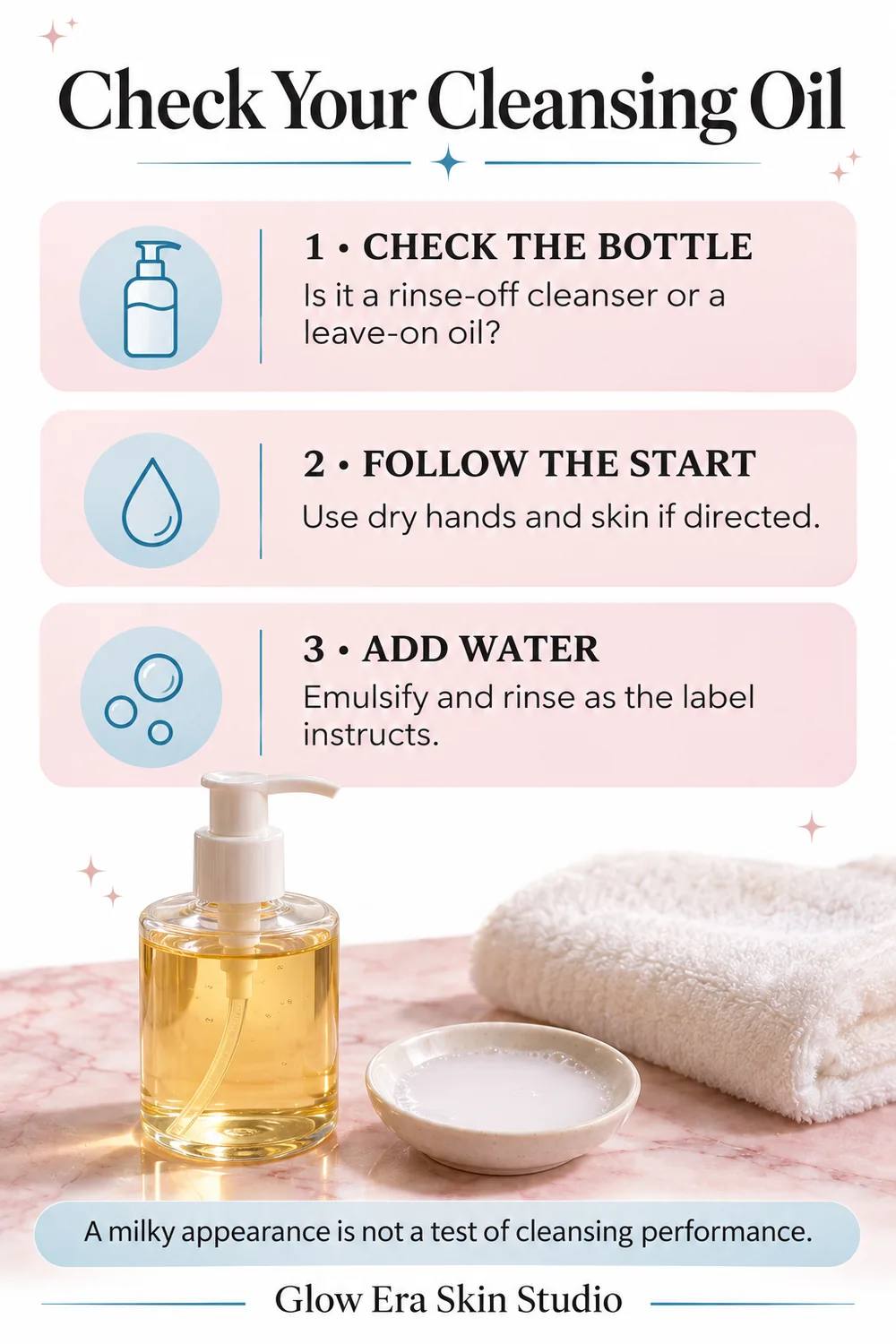
The sequence for my Prequel cleansing oil
Prequel is the oil cleanser in my evening routine. Its Pre-Gleanse directions specify dry hands and dry skin, followed by adding water to emulsify, rinsing thoroughly, and a second cleanse.
The order is the useful detail: the initial massage and the water-added rinse are separate parts. Starting in a running shower can make it harder to follow a dry-start instruction.
For this formula, follow the labeled sequence before deciding that a lack of cloudiness means you need a new bottle. Do not add soap or other products to the bottle to try to change its behavior.
What to check if it still feels oily
Ask whether you added water before trying to rinse everything away, whether you rinsed around your hairline and jaw, and whether you followed any second-cleanse instruction.
Keep the checks gentle. Longer rubbing, hotter water, and a rough cloth are not useful substitutes for understanding the product’s method.
My Double Cleansing 101 post covers the two-step routine. This article focuses on the water-added stage, rather than repeating that whole guide.
When to ask the manufacturer
If your technique matches the directions but the product behaves differently from its description, contact the brand with the exact product name and batch information. Check the expiry or opening guidance on the packaging too.
A cloudy rinse is not a way to diagnose a counterfeit, measure cleansing performance, or decide that a product has gone bad. Unexpected changes in smell, texture, or comfort deserve a separate check.
What if my face feels tight afterward?
Read why skin can feel tight after washing before adding more cleansing. If the product burns or irritates your skin, stop using it and get advice if symptoms persist.
The cleansers in my own routine are listed on my Amazon skincare favorites page. Check the exact product’s directions when comparing options.
Sources
Prequel: Pre-Gleanse directions; Dermalogica: PreCleanse directions; Cleveland Clinic: Double cleansing.
This article provides general skincare education, not a diagnosis or individualized treatment advice. Follow your product labels and your healthcare professional’s instructions.
Leave a Reply