
You do not need a skincare fridge for a routine to work. Follow each product’s storage instructions first. A product feeling pleasantly cool is different from a product requiring refrigeration to stay usable.
I’m Jenn, I’m 40, and I’m studying to become an aesthetician. After years of struggling with acne, I’m now happy with my skin and share simple routines and affordable favorites at Glow Era Skin Studio.

Start with the products you already own
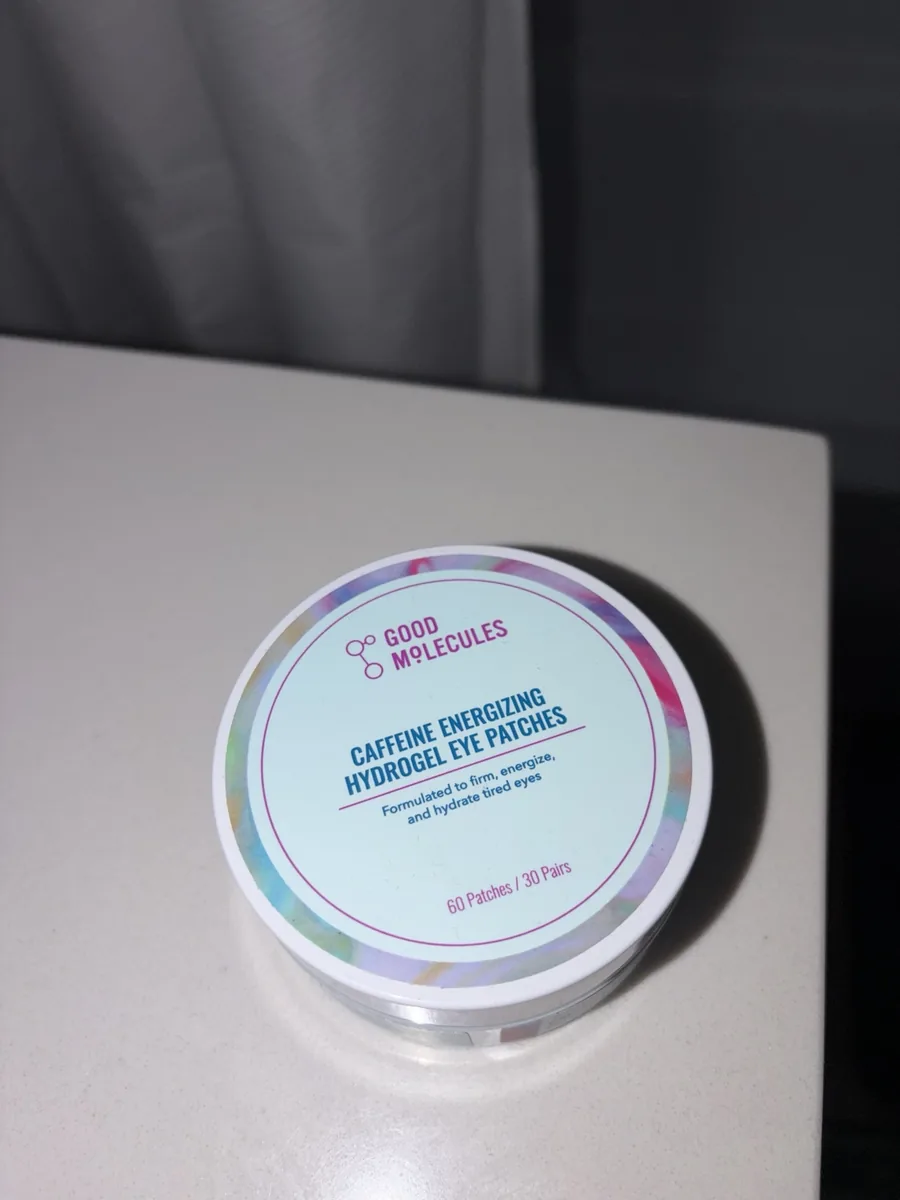
My collection includes Good Molecules treatments, moisturizer, eye cream, and hydrogel eye patches, alongside BYOMA toner and sunscreen. That list is not a reason to buy another appliance.
I have shared which products I use, but I have not said I refrigerate them or tested a chilled routine against room-temperature use. I will not turn storage advice into a personal experiment I did not do.
What ordinary storage can look like
Cleveland Clinic’s dermatologist guidance explains that most skincare is made for room-temperature storage. A cabinet in a temperature-controlled room, away from direct sunlight and heat, is a practical starting point.
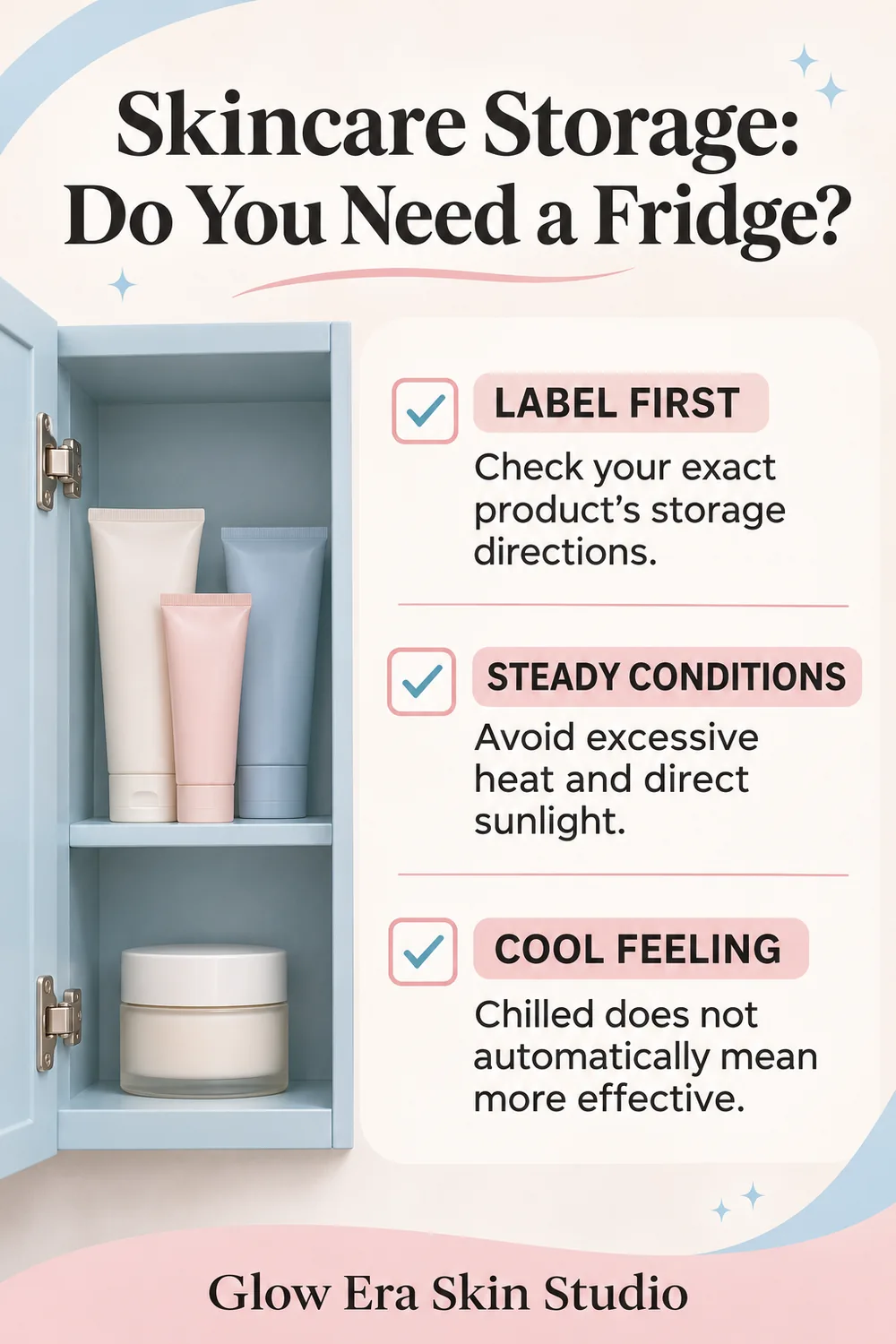
Check whether your bottle gives a temperature range or a specific storage instruction. A broad internet tip should not override that information.
What about cooling eye patches?
Some people enjoy the cool feeling of an eye product, but comfort does not prove extra long-term benefit. Confirm that the exact formula and packaging can be chilled before moving it into a fridge.
Cold storage does not change how long a patch should stay on or make a used patch reusable. My eye-patch order guide explains why the type of patch matters.
Colder is not automatically better
Do not assume that a food refrigerator, a skincare refrigerator, and a freezer create equivalent conditions. Freezing a formula is not a substitute for reading its storage directions.
FDA guidance also emphasizes keeping cosmetic containers clean and avoiding excessive heat. Closing caps and using clean hands remain useful habits regardless of where you store a product.
Use the label, not a storage trend
If a product changes unexpectedly in smell, color, or texture, ask the manufacturer about the exact item and storage history. Putting it in a fridge does not reset its age or establish that it is safe to keep using.
For sunscreen, there is a separate heat question. My commute sunscreen post explains planning an application, but keeping the bottle accessible also means storing it correctly.
Want to see the products in my own collection? Explore my Amazon skincare favorites and choose by the step you are looking for.
Sources
Cleveland Clinic: skincare fridges and storage; FDA: cosmetic shelf life and storage
This post shares personal experience and general skincare education, not a diagnosis or an individual treatment plan. Follow your product directions and your healthcare professional’s advice. As an Amazon Associate I earn from qualifying purchases.
Leave a Reply