
Thinking about trying retinol after 35? You might be wondering which bottle to buy or how to avoid dry, irritated skin.
Maybe you have fine lines and still get breakouts. You want a routine that makes sense without buying a shelf full of products.
Retinol may fit into that routine. These seven tips can help you understand where to start and what to expect.
Want help putting your whole routine together? Explore The Skin Reset: 35+ Edition, my self-paced course for adults dealing with changing skin and skincare overwhelm.
Before buying a new bottle, take a look at what you already use. A clear plan can make the next step easier.
1. Know which retinoid you are buying
Retinoids are a family of vitamin A ingredients. Retinol, retinal, and prescription tretinoin are members of that family.
These ingredients are related, but they are not the same. DermNet’s overview of topical retinoids explains their uses.
Keep this in mind when comparing products. The same percentage on two different retinoids does not mean the same strength.
The whole formula matters, too. The highest number on the shelf is not automatically the best place to start.
Choose one concern you want help with. It might be uneven texture, fine lines, dark spots, or breakouts.
Write it down before shopping. Bring that question to a dermatologist or pharmacist if you need help choosing.
You do not need retinol just because you turned 35. You can choose skincare based on your needs and comfort.
2. Start slowly
American Academy of Dermatology’s retinol guide recommends starting with a gentler formula and building up slowly.
Starting slowly helps reduce irritation. You do not have to begin with the strongest product or use it every night.
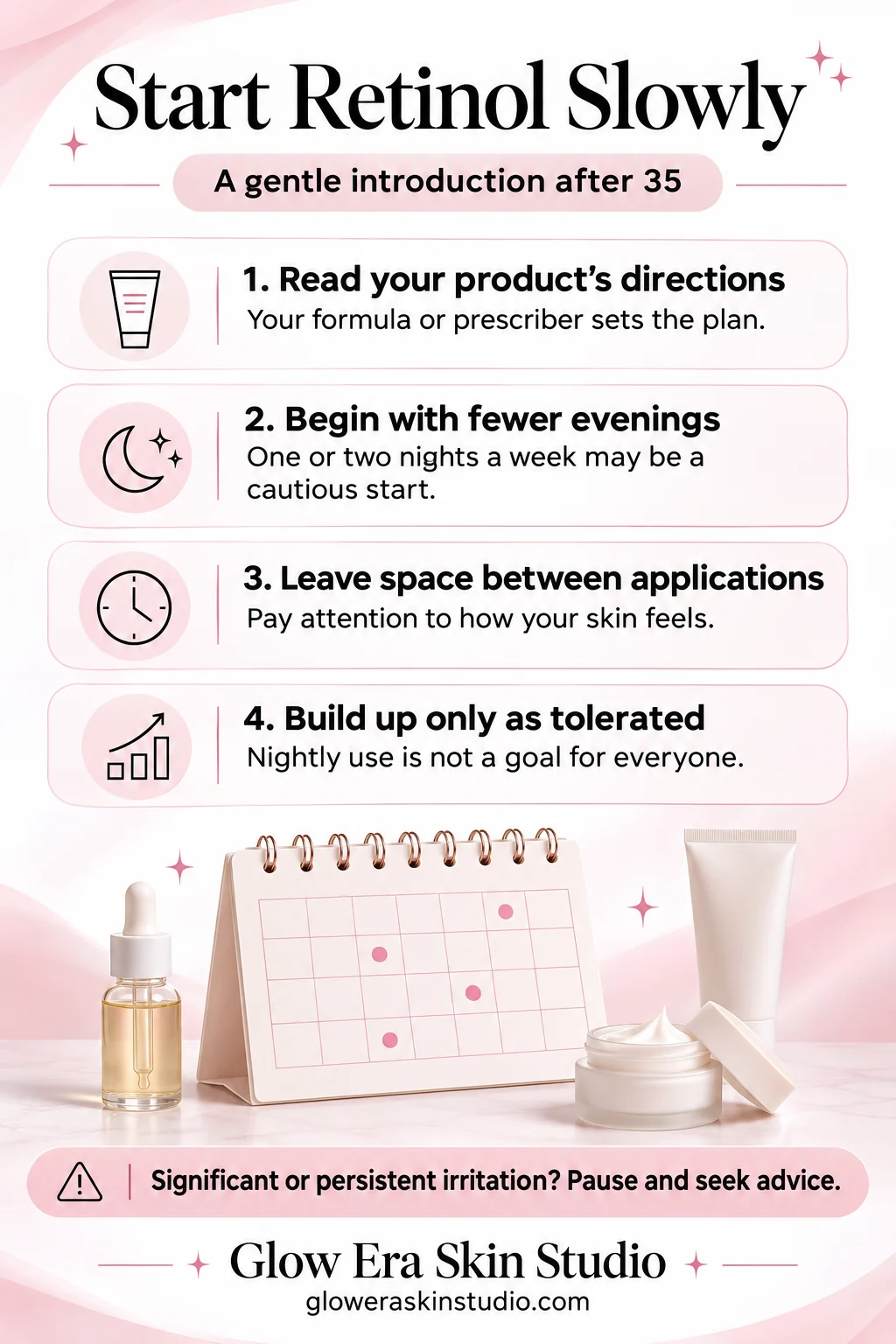
Follow the label or your prescriber’s directions. For some cosmetic retinols, one or two evenings a week may be a cautious start.
Leave time between applications. Notice how your skin feels before using it more often.
Pick your evenings ahead of time. A calendar reminder can help you remember without adding another decision to bedtime.
If you miss a night, return to your plan. Do not double up to catch up.
Nightly use is not a goal for everyone. Your skin needs to tolerate the routine you choose.
3. Keep your basic routine
Check your basics before adding another treatment. AAD’s guide to choosing anti-aging skincare puts sunscreen and moisturizer first.
Choose products that suit your skin and budget. Spending more does not guarantee better results.
Do you already like your cleanser and moisturizer? Make sure you understand what each product does.
Think about a busy morning or a tired evening. Your routine should be simple enough to follow on those days.
My Double Cleansing 101 post can help you decide whether you need an extra cleansing step.
Write your evening steps in order. Keep your retinol’s directions nearby while you learn the routine.
Need help organizing your products? The Skin Reset: 35+ Edition includes routine planners, checklists, and a skin observation journal.
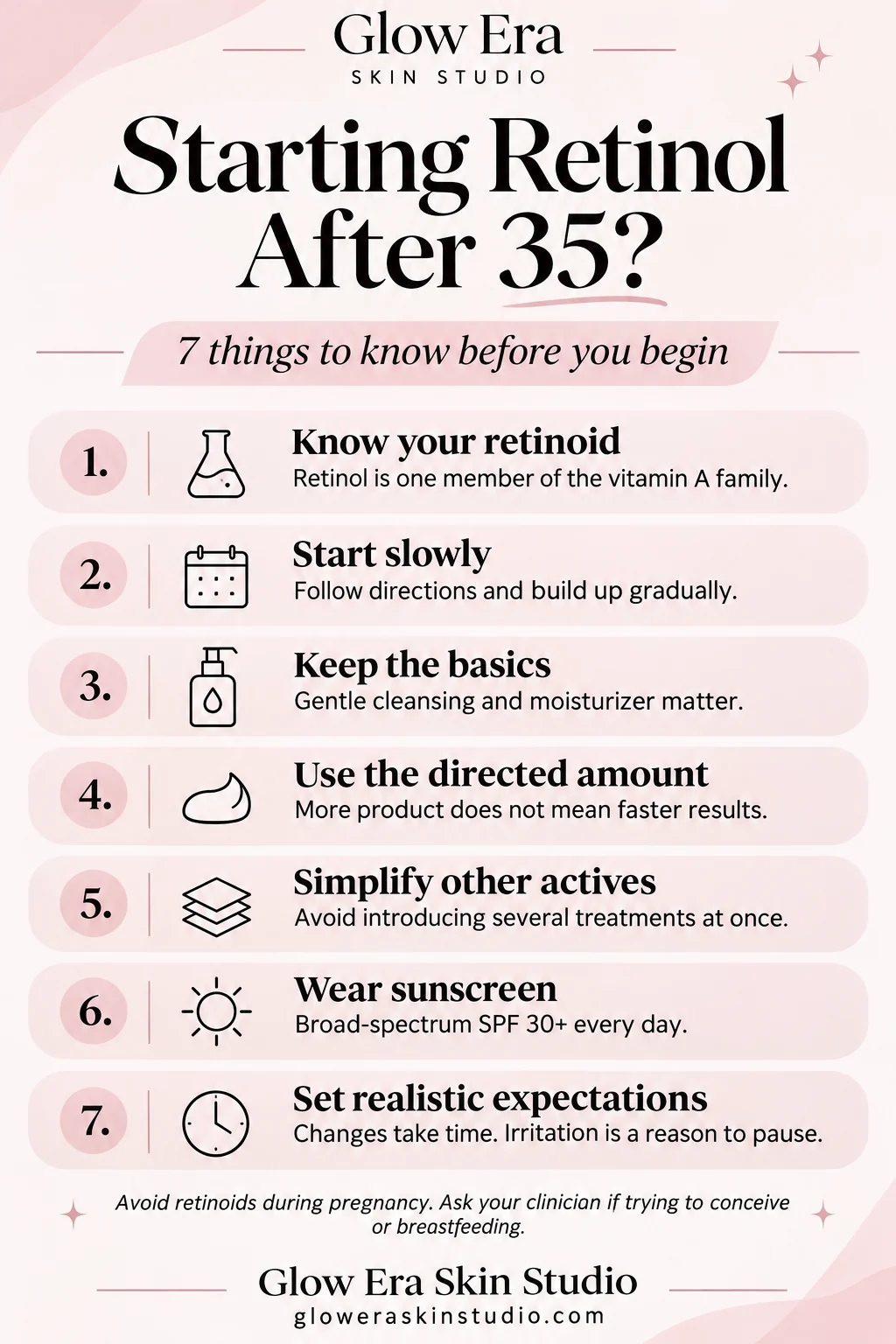
4. Use the directed amount
Cleveland Clinic’s retinol guidance describes a typical facial application as a thin, pea-sized layer.
Your product’s directions or your clinician’s instructions come first. Try a small area before applying a new product more widely.
For many formulas, you cleanse gently, let skin dry, apply the directed amount, and moisturize. Extra product will not speed up progress.
Keep it away from your eyes, mouth, and nose. Avoid eyelids and lips unless the formula is made for those areas.
Keep the packaging while you learn the directions. Advice about a different bottle may not apply to yours.
If you use a prescription, ask where moisturizer fits. Follow the plan your prescriber gives you.
Think about your neck separately. You do not have to apply a new facial product everywhere on the first night.
5. Simplify your other treatments
Look through the products you already own. Check for other retinoids, exfoliating acids, scrubs, and acne treatments.
Different bottles can repeat ingredients. Read the labels before adding another treatment to the same evening.
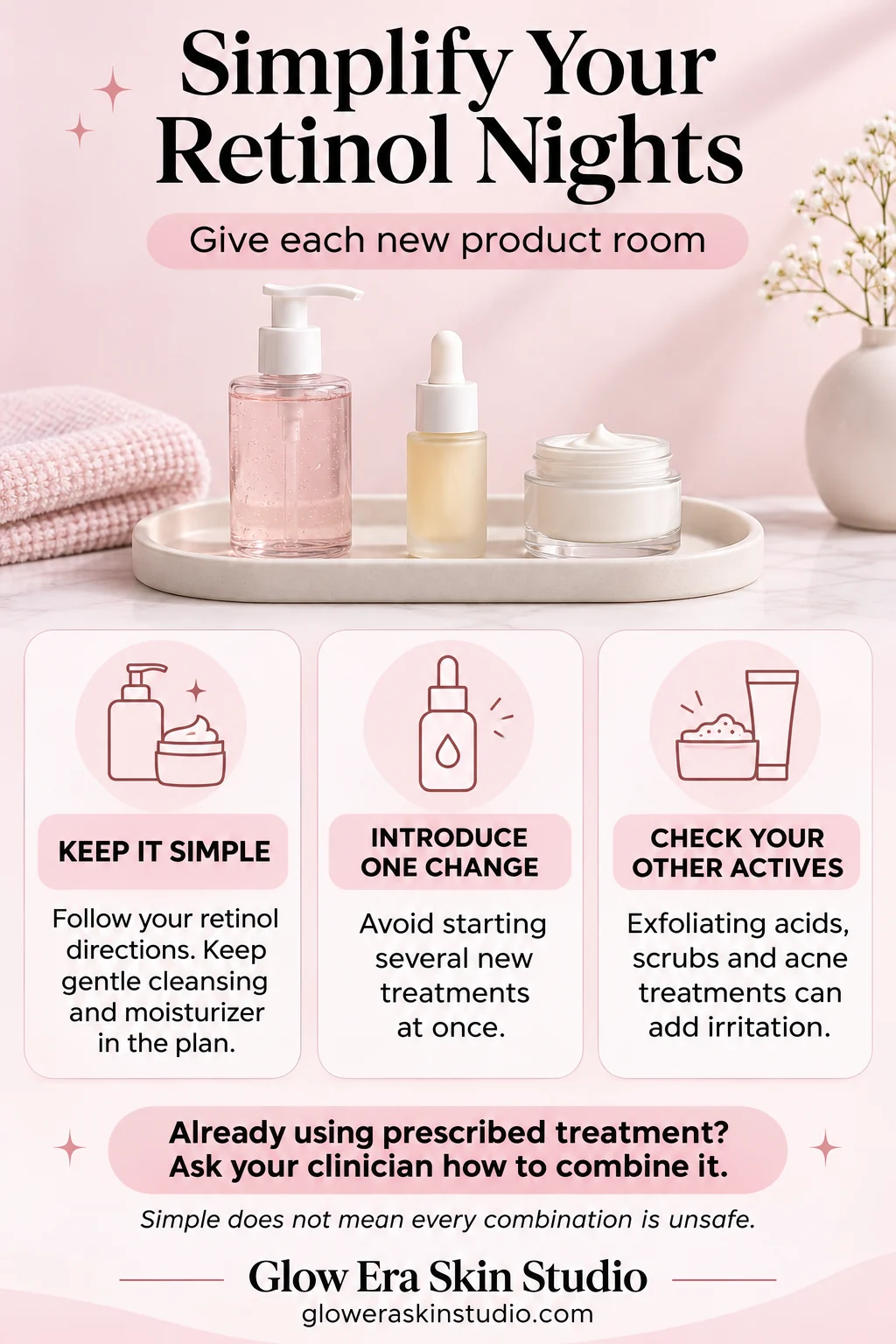
Using several irritating products together can make irritation worse. Cleveland Clinic advises care when combining retinol with other treatments.
While starting retinol, consider leaving exfoliating acids out of those evenings. This helps you track how your skin responds.
Keep the rest of the evening simple. Follow your retinol directions and use your usual moisturizer.
Some treatment combinations are prescribed on purpose. Ask your clinician before changing an existing treatment plan.
Bring your product names to that conversation. This makes it easier to check the actual combination.
6. Wear sunscreen
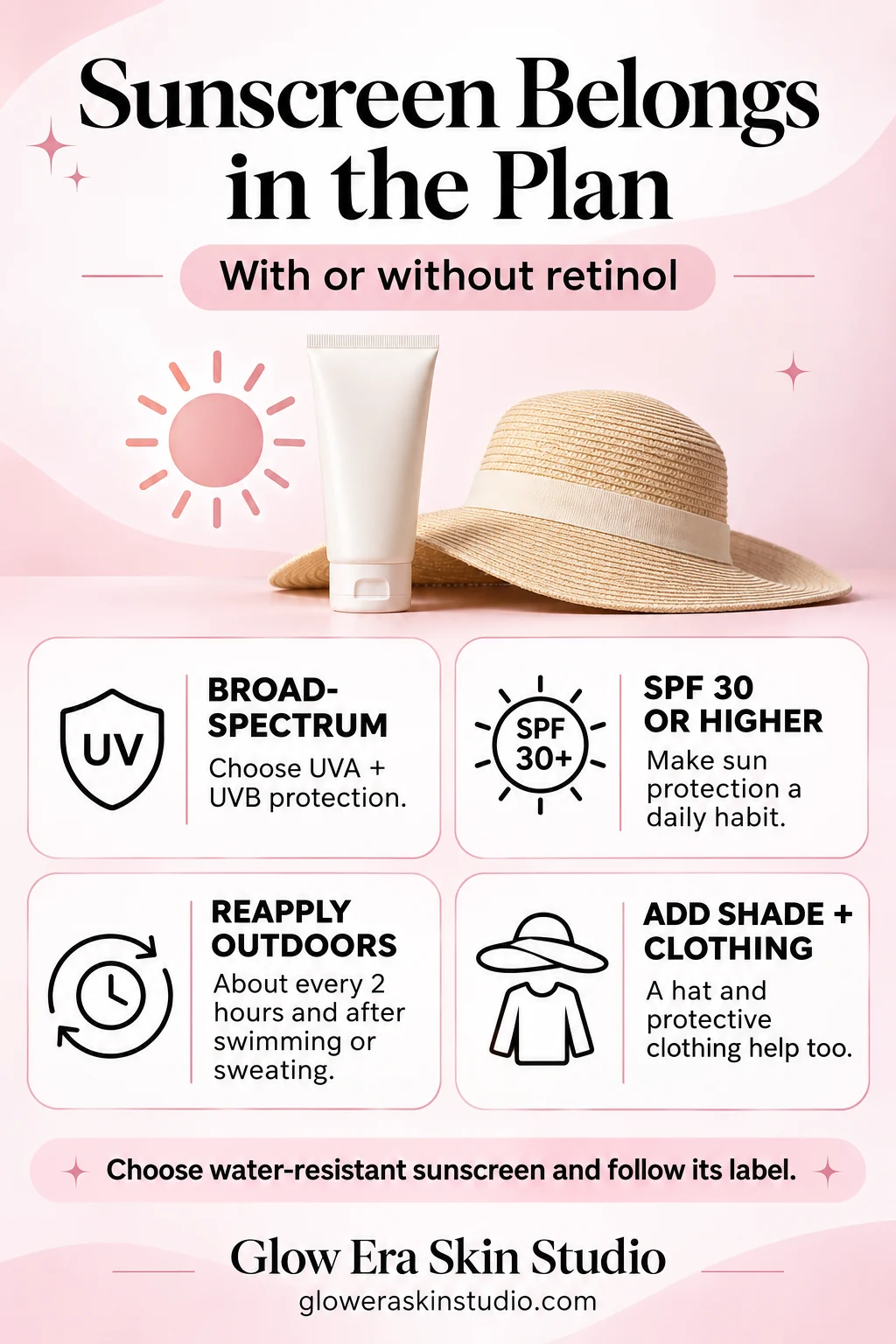
Choose broad-spectrum, water-resistant sunscreen with SPF 30 or higher.
AAD’s sunscreen application guide recommends reapplying about every two hours outdoors and after swimming or sweating.
Keep sunscreen where you get ready. Bring it along when you will spend time outside.
Remember everyday outings, too. Walking the dog or taking lunch outside still counts as outdoor time.
Retinol does not replace sunscreen. Shade, protective clothing, and sun protection matter even on cloudy days.
My morning and night skincare routine shows how I arrange my steps. Use it as an example rather than a shopping list.
7. Know what to expect
Expect gradual changes rather than overnight results. Give yourself time to judge what is happening.
Mayo Clinic’s guide to wrinkle creams explains that results from nonprescription products are usually modest and vary.
Write down your product, start date, and application schedule. Track comfort as well as changes in appearance.
If you take photos, use similar lighting. Checking your face every morning can make slow changes harder to notice.
Stop and seek advice for significant burning, swelling, a rash, or persistent irritation.
Do not assume every new bump is a harmless purge. Your skin does not have to hurt for a product to work.
Avoid retinoids during pregnancy. Ask your healthcare professional before starting if you are trying to conceive or breastfeeding.
AAD’s pregnancy skincare guide lists retinoids among the ingredients to avoid during pregnancy.
Talk to a dermatologist first if you have rosacea, eczema, very reactive skin, or a rash. Persistent or painful acne also deserves professional care.
Retinol is optional. Another approach may suit your skin better.
Give your routine a clear plan
Ready to stop guessing what belongs in your routine?
The Skin Reset: 35+ Edition gives adults over 35 a place to learn the basics and organize their next steps.
Inside, you will find:
- 6 written, self-paced lessons covering changing skin, adult acne, ingredients, and morning and evening routines.
- 7 printable, fillable worksheets for skin observations, routine planning, and organizing your next 30 days.
- 3 bonus e-books: The Affordable Skincare Edit, Skincare Under Makeup, and The Beauty Hygiene Guide.
Explore the course to see what is included. Build a plan you understand and can follow at your own pace.
Save this for later
Want to keep these tips handy? Pin your favorite image below to your skincare board.
Select an image to save it for later on Pinterest.


This article and course offer general skincare education, not a diagnosis or personal treatment plan. Results vary.
Speak with a qualified healthcare professional about persistent, painful, or changing symptoms.
Leave a Reply