

Yes, wash your face after heavy sweating, using a gentle cleanser and a light touch. The American Academy of Dermatology recommends washing as soon as possible after sweating, particularly when a hat or helmet has held perspiration against your skin.
You do not need a harsh cleanser, a scrub, or an entire extra treatment routine just because you worked up a sweat.
I’m Jenn, I’m 40, and I’m studying to become an aesthetician. At Glow Era Skin Studio, I share practical ways to make skincare decisions without adding a new product for every situation.
This question can come up after exercise, yardwork, a hot commute, or a busy afternoon outside. The useful starting point is what actually happened to your skin, followed by a straightforward cleanup plan.
Why washing after sweating is a separate situation
A usual morning and evening routine does not account for every sweaty activity between those times. The AAD’s face washing guidance specifically includes washing after heavy sweating alongside the normal daily washes.
That does not mean a small amount of warmth requires you to abandon your day and start your routine over. Think about a noticeably sweaty face, damp hairline, or perspiration trapped under a cap or helmet.
Do not use the rule as a reason to count every small change in temperature as another cleansing appointment. The point is caring for skin after sweating, rather than pursuing a face that never has any oil or moisture on it.
You can read the general recommendation in the AAD’s Face Washing 101 guide. Individual skin conditions or a treatment plan may call for more specific advice.
Keep the actual wash gentle
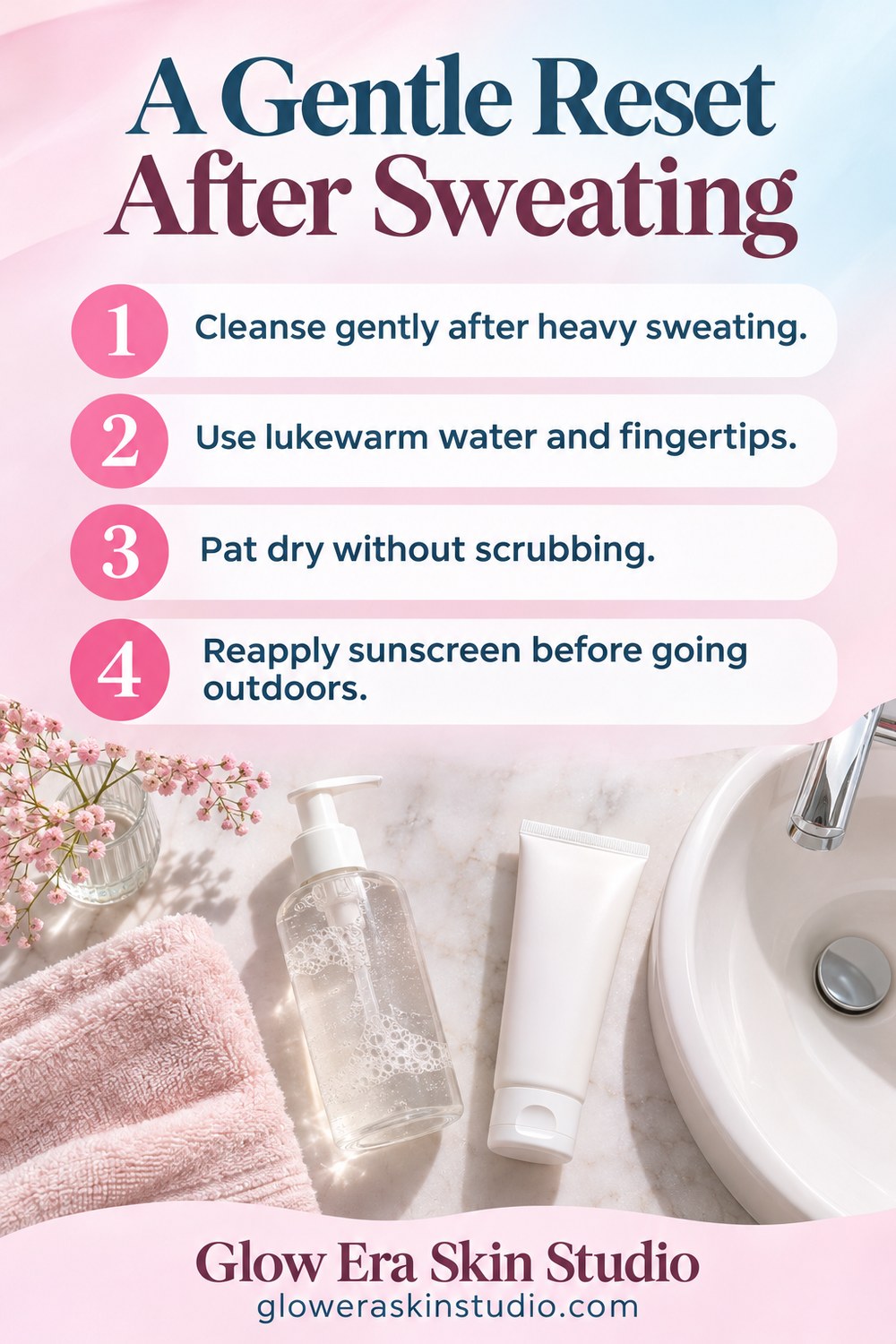
Use lukewarm water and apply a gentle cleanser with your fingertips. Rinse it away and pat your face dry rather than rubbing with a rough towel.
Avoid treating a sweaty face like a dirty pan that needs extra friction. Scrubbing can irritate skin, and the AAD advises against using rough cleansing tools for an ordinary face wash.
The goal is a comfortable cleanse, not a tight or squeaky feeling afterward.
Give yourself enough time to rinse the areas you actually washed. A rushed splash followed by vigorous towel rubbing is not the gentler option simply because it took fewer seconds.
Does the cleanser need to be a special workout product?
A separate bottle labeled for the gym is not automatically necessary. A gentle cleanser you already tolerate may fit this step, depending on its instructions and your individual needs.
The AAD’s workout acne guidance recommends a mild, oil free cleanser for acne prone skin. A medicated wash is a different choice and should fit the rest of your routine rather than being added reflexively after every workout.
Do not start a new acid cleanser, scrub, and spot treatment together because you are worried about sweat. That creates a much larger routine change than the original question requires.
If your current wash leaves your face uncomfortable, consider the product and technique with your dermatologist. Increasing the strength does not automatically solve the problem.
What if I cannot get to a sink immediately?
Make the next available cleanup opportunity easy to use. A short delay after a walk is different from intentionally staying in sweaty clothing and equipment for the rest of the day.
The AAD notes that lukewarm water can still be useful when you do not have cleanser available. That makes a simple rinse a practical temporary option, rather than a reason to apply several unfamiliar products from someone else’s gym bag.
When you can, return to the gentle cleansing routine that fits your skin. If you have a specific medical plan for acne, eczema, or another condition, follow the advice you were given for those situations.
Avoid sharing face towels or borrowing a product whose ingredients and purpose you cannot check. Convenience is useful, but you still want to know what is touching your skin.

Think about the towel during the activity
During exercise, use a clean towel to gently pat away sweat. The AAD’s workout acne advice favors a light touch over rubbing perspiration across the skin.
Keep the towel you use for your face separate from one that has been sitting on equipment or the floor. Decide where it will go before your hands are full of a water bottle, keys, and a bag.
If you exercise away from home, packing a clean towel can be a useful preparation step. It does not need to be a special skincare accessory to have a clear role.
Put the used towel with laundry when you get home. Having a predictable place for it can keep tomorrow’s clean supplies from becoming mixed with today’s used ones.
Include the hairline and equipment in your planning
A sweaty hat or helmet can make the face feel different from a short indoor activity. Follow the equipment’s care instructions and give washable items their usual cleaning.
This is also a practical moment to notice what repeatedly touches your face. A headband, chin strap, phone, or pair of glasses may need attention within its own cleaning instructions.
Do not improvise with household cleaners on your skin. Cleaning a piece of equipment and cleansing your face are separate jobs with different appropriate products.
If a particular piece of equipment repeatedly leaves a rash or sore area, bring that pattern to a healthcare professional. More face washing is not a diagnosis or a solution for every kind of irritation.
What goes on after the wash?
Keep the next steps connected to what you are doing afterward. A simple cleanse does not obligate you to repeat toner, serum, eye cream, and every treatment from the beginning.
If your skin needs moisturizer, use a suitable one you already tolerate. The AAD recommends moisturizing dry or itchy skin after cleansing.
If you will be outdoors again, consider sun protection as its own step. Washing, sweating, and drying with a towel should not be treated as preserving an untouched layer of sunscreen.
A post sweat cleanup and a full evening routine can serve different purposes. Choose the steps you need now instead of assuming that every wash must be followed by every bottle on the shelf.
Reapply sunscreen when the next part of your day requires it
For outdoor activity, the AAD recommends sunscreen reapplication at least every two hours and after swimming or sweating. Follow your sunscreen’s specific directions, including its instructions about water resistance and towel drying.
Water resistant does not mean waterproof. The FDA explains that labeled water resistance is tested for a stated period, usually 40 or 80 minutes, and that sunscreens still need reapplication.
Do not assume the sunscreen applied before a sweaty activity will automatically cover the afternoon afterward. Recheck your plan before heading back outside.
The FDA sunscreen guide explains the label information. Shade, clothing, and other protective steps belong in the plan too.
Fit the cleanup into a real day
If you exercise shortly before bed, it may be practical to do your evening cleanse after the activity instead of washing immediately before and again immediately afterward. Think about what you wore and what still needs removing.
If you exercise in the middle of the day, your next steps may be simpler: gentle cleansing, moisturizer if needed, and appropriate sun protection before going outdoors. This is an example of organizing the routine, not a requirement to use an identical sequence every day.
Place the items you actually use together so cleanup does not require searching through a crowded shelf. A clear spot for your cleanser, clean towel, and next needed product can help.
If the real question is whether to wash again hours later after a normal afternoon cleanse, my guide to washing after work and before bed addresses that different timing question.
Notice when your skin needs individual advice
Repeated burning, a persistent rash, or worsening breakouts deserve more than another change to your washing schedule. Ask a dermatologist to help you assess the pattern.
Write down when symptoms appear, what products were used, and whether a hat, helmet, or other equipment was involved. Observations can help make the conversation more specific.
You do not need to diagnose the cause from a single workout. Several issues can look similar, and an ordinary face washing guide cannot tell you which one applies.
Start with gentle cleansing after heavy sweating, then keep the rest of the routine proportionate to your skin and your plans.
For a broader explanation of routine steps and product choices, explore The Skin Reset: 35+ Edition. It provides general education rather than a personal treatment plan.
Sources and further reading
AAD: Face washing; AAD: Workouts and skin; AAD: Workout acne care; AAD: Applying sunscreen.
This article provides general skincare education and does not replace advice from your dermatologist or another qualified healthcare professional.
Leave a Reply