
Sunscreen can pill when the formula, the products underneath it, and the way you apply them do not work well together. The little rolls may be product residue, rather than a sign that your skin needs scrubbing.
I’m Jenn, I’m 40 years old, and I’m the blogger behind Glow Era Skin Studio. I’m now happy with my skin after years of struggling with acne, and I enjoy sharing my skincare routine and affordable favorites.
Daily sunscreen is a step I love. I started this blog to make everyday skincare questions, including how products layer together, easier to understand.

Start by simplifying optional layers, letting products settle, and avoiding repeated rubbing. Keep using the amount of sunscreen directed on the label while you troubleshoot.
It is frustrating to finish your morning routine and watch everything roll up. You do not need to replace your entire skincare collection to work out which step is causing the problem.
What does sunscreen pilling look like?
Pilling happens when skincare forms little balls or flakes on the surface as you apply or rub products. You might notice it around your hairline, jaw, or wherever your fingers keep passing over the same area.
It can show up as you apply sunscreen or when you add makeup afterward. Pay attention to when it starts, because that gives you a more useful clue than judging the finished routine alone.
Flaky skin and product pilling can look similar, and sometimes both are present. If you also have redness, itching, or persistent peeling before applying anything, consider a skin concern as well as a layering issue.
Why does it happen with some product combinations?
A 2024 study of 528 women found that pilling varied with skincare combinations, skin characteristics, and application methods. The findings support looking at the whole routine instead of blaming one ingredient.
That study used particular products and participants, so it cannot predict how every sunscreen will behave on your face. It also did not establish how a pilling episode changes the protection from your sunscreen.
A product that pills in one routine may work better in another. That makes a simple comparison more useful than deciding that an entire category of sunscreen is wrong for you.
Start by removing optional layers
Write down everything you apply before SPF, including toner, essence, serum, moisturizer, and facial oil. It is easy to think of each as a small step while overlooking the finished stack.
For your first comparison, keep your necessary skincare and sunscreen, then leave out an optional cosmetic layer. Keep prescribed treatment in place unless your clinician advises a change.
If your skin feels comfortable with a moisturizing sunscreen alone, a separate morning moisturizer may be unnecessary. If you need that moisturizer for comfort, keep it and consider removing an optional serum instead.
If you are unsure whether to keep that layer, see my guide to moisturizer for oily skin.
This is a troubleshooting exercise, rather than a rule that everyone should use fewer products. The goal is to learn which combination works for your face.
Let your skincare settle before the next step
Follow each product’s instructions and avoid immediately working the next layer into a wet, slippery stack. As a practical trial, give your moisturizer time to settle before sunscreen.
You do not need an exact universal timer between every bottle. The useful question is whether rushing produces a different result from applying the same routine more patiently.
Build that pause into something you already do, such as getting dressed before applying SPF. Keep the routine realistic enough that you can repeat it on a busy morning.
Spread sunscreen evenly without repeatedly rubbing
The pilling study found that rubbing methods were associated with more pilling events. That gives you a reason to notice whether you keep massaging the same patch after the sunscreen has already been spread.
Apply according to the label and distribute it evenly, then avoid continuing to rub just to chase a perfectly invisible finish. Gentle application still needs to cover the intended area.
Do not turn “less rubbing” into a few scattered pats that leave gaps. If the formula is consistently difficult to spread at its required amount, consider a different sunscreen.
Never solve pilling by using less sunscreen
A smoother finish is not worth underapplying your sunscreen. Keep the labeled amount and change an optional layer or product combination instead.
Choose broad-spectrum SPF 30 or higher, with water resistance when needed. Follow application directions, reapply as directed when outdoors, and use shade and protective clothing too.
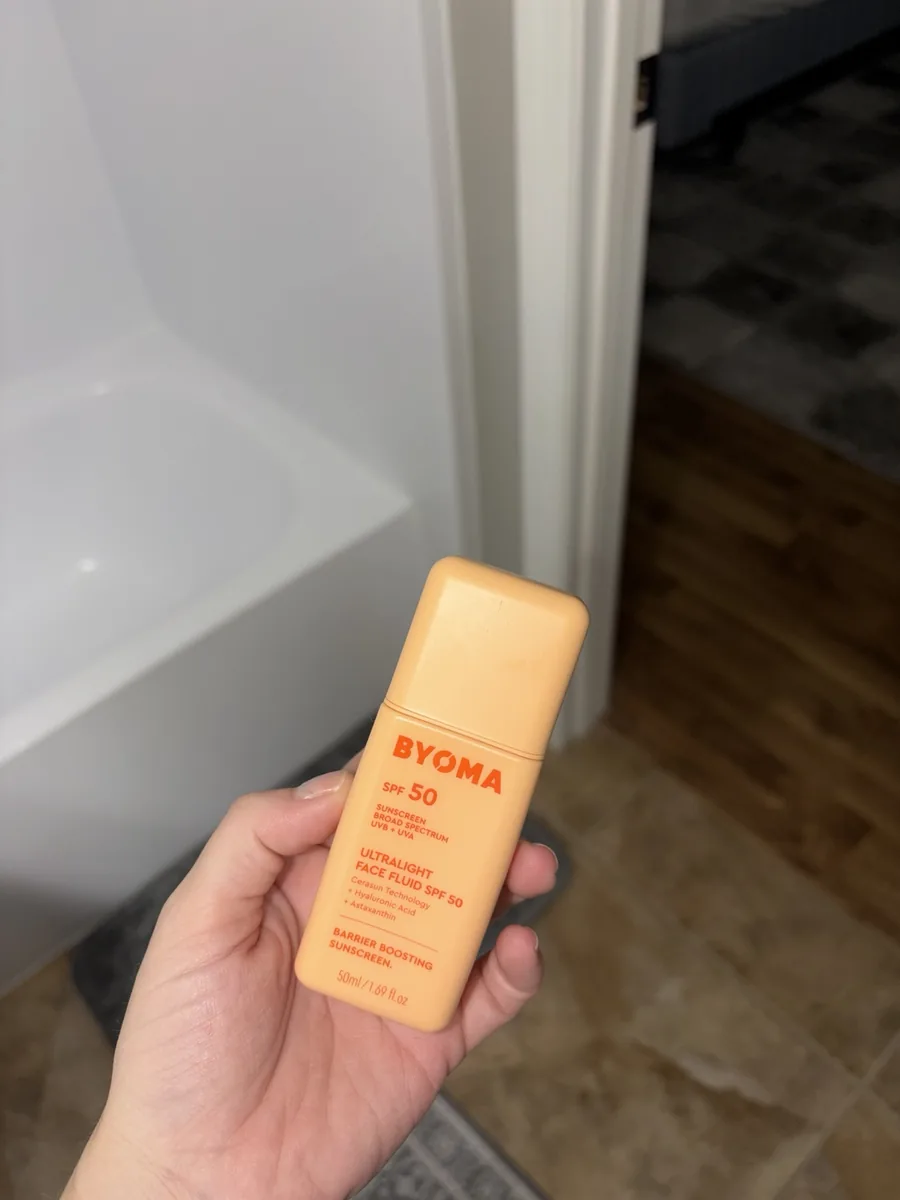
If a sunscreen only looks good when you use a tiny dab, it may not be the right formula for your routine. Look for something you can comfortably apply in the amount required.
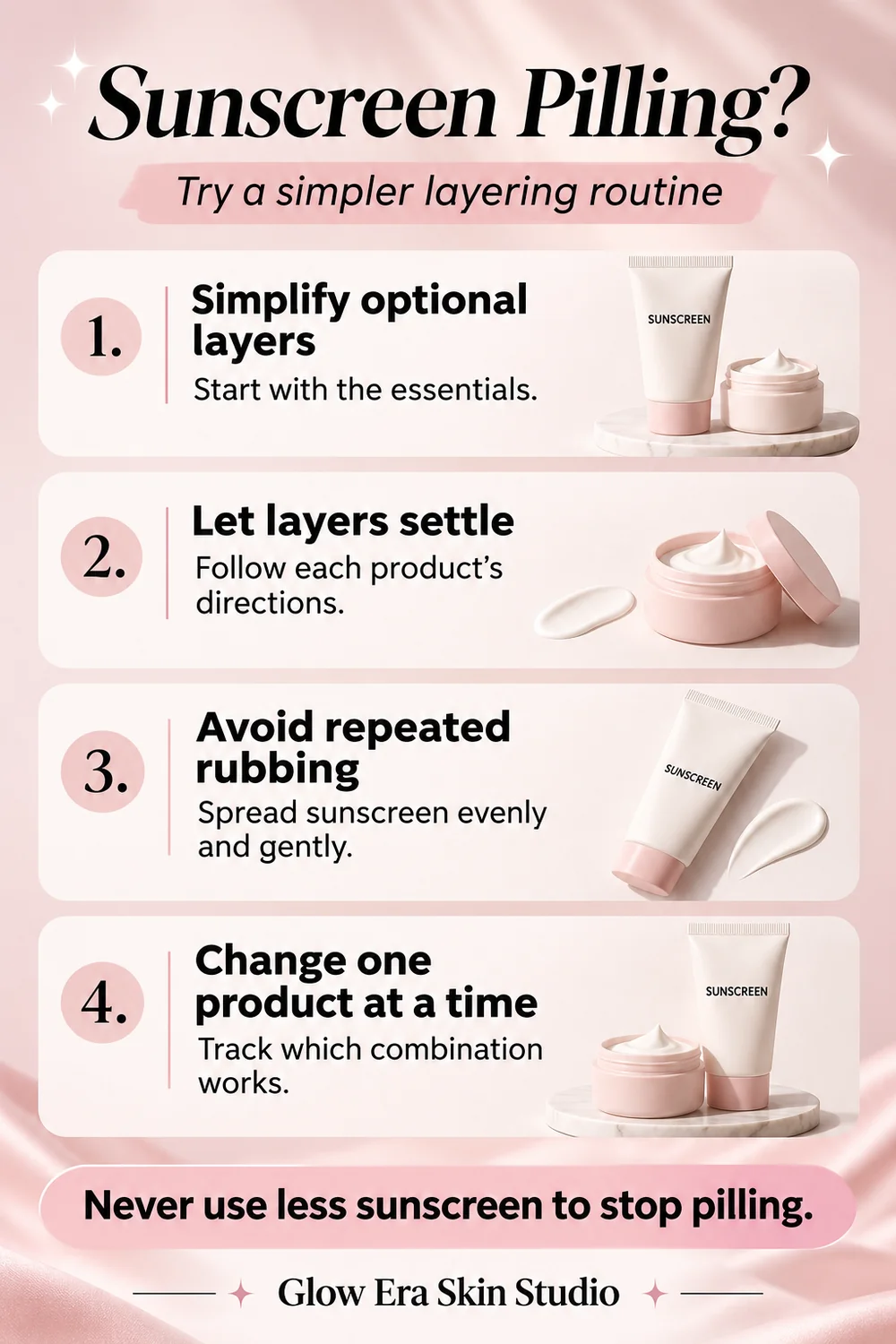
A simple way to find the troublesome step
Begin on a morning when you have time to pay attention. Record your products in order and note whether the rolling begins before sunscreen, during its application, or afterward.
Try your simpler routine while keeping sunscreen use consistent. If that works, reintroduce one optional product at a time on later mornings.
Change one thing at a time so you can tell what made the difference. Swapping three products and changing your technique at once might improve the result, but it will not explain why.
A useful phone note might read: “Moisturizer plus SPF worked; adding serum brought back rolling.” That observation can guide your next choice without a new shopping list.
Can I mix sunscreen with moisturizer to stop pilling?
Apply separate products separately, following their directions. Mixing sunscreen with moisturizer in your hand is not the same as using a tested moisturizer that already contains SPF.
A combined moisturizing sunscreen can be a convenient option if you prefer fewer steps. Treat it as sunscreen: use the directed amount and follow its reapplication instructions.
Do not add facial oil, water, or serum to thin out a sunscreen. If you dislike the texture, choose a product you can use as supplied.
Does pilling mean my sunscreen is not working?
You cannot measure the remaining SPF by looking at a few flakes. Pilling alone does not tell you how much protection is left or whether coverage is even.
If substantial product has rolled off and the layer looks patchy, the cautious practical choice is to gently remove the problematic layers and reapply sunscreen correctly. Avoid assuming a visibly disrupted application is reliable.
Allow time for that before sun exposure and use other sun protection while sorting out the problem. Follow your sunscreen’s label rather than trying to repair it by mixing products together.
Should I exfoliate to fix the flakes?
Pilling is not an automatic reason to exfoliate. Start with your layers and technique instead of adding a scrub or acid to an already frustrating routine.
If your bare skin is persistently flaky, irritated, or sore, get advice about that separately. A stronger exfoliating routine may be the wrong response to what you are seeing.
Keep the solution simple
You do not need to identify every ingredient in every bottle. A repeatable routine that spreads comfortably is a more useful goal than finding a complicated explanation for each crumb.
For help organizing your steps, see my morning and night skincare routine. Adapt the structure to the products you tolerate and actually need.
Looking for sunscreen and everyday skincare options? Browse my Amazon product list page for my skincare picks, organized by routine step.
Sources
Lua et al., 2024: Understanding the causes of skincare product pilling; AAD: Skincare application order; AAD: Applying sunscreen; CeraVe: Layering moisturizer and sunscreen.
This article provides general skincare education and does not replace individualized advice from a dermatologist.
Leave a Reply