

Skin that feels tight after washing often needs a gentler cleansing routine and more moisture. A harsh cleanser, hot water, repeated washing, or irritation from other products can leave your face uncomfortable.
I’m Jenn, I’m 40 years old, and I’m the blogger behind Glow Era Skin Studio. After years of struggling with acne, I’m now happy with my skin, and I share skincare to help others feel less overwhelmed.
I focus on simple, affordable routines. Understanding how your face feels after cleansing is a useful place to start.

That tight, squeaky feeling can seem reassuring when you want to remove sunscreen, sweat, or oil. But your face does not need to feel stretched to be clean.
The useful question is what happens after you rinse: does your skin feel comfortable, or are you rushing to put something on because smiling feels uncomfortable?
What does tight skin after cleansing mean?
Tightness describes a feeling, rather than a diagnosis. It can come with dryness, rough patches, flaking, or stinging, but the feeling alone cannot tell you exactly what is happening.
Your skin’s outer layer helps limit water loss and keeps irritants out. When that barrier is disrupted, skin may struggle to stay comfortable and hydrated.
A tight feeling is a reason to review your routine, not proof that you have permanently damaged your skin. Start with the basics before buying a collection of barrier products.
Your cleanser may be too harsh for your skin
A cleanser should remove what you need to wash away while remaining comfortable to use. The strongest cleanser on the shelf is not automatically the best match for your face.
The American Academy of Dermatology recommends a gentle, non-abrasive cleanser without alcohol in its face-washing guidance. That is a helpful starting point when your current wash leaves your skin feeling stripped.
Look beyond words such as “deep clean,” “detox,” or “pore purifying.” Those phrases do not tell you how your skin will respond after rinsing.
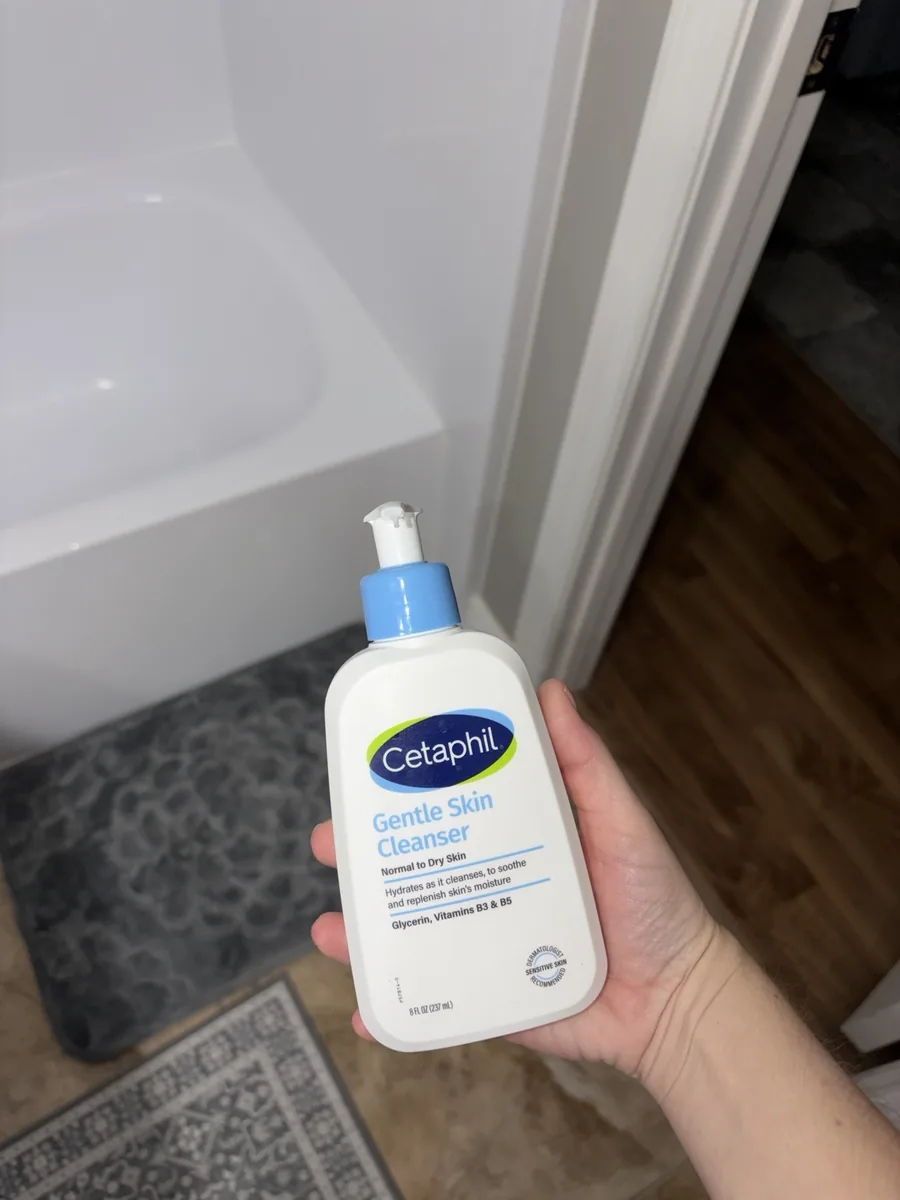
Foam alone is not a reliable way to judge a cleanser. Instead, notice whether the finished formula leaves you comfortable and removes the products you actually wear.
Hot water and scrubbing can add irritation
If you wash your face in the shower, check the temperature. The water that feels relaxing on your shoulders may be hotter than your face needs.
Use lukewarm water and your fingertips, then rinse gently and pat dry. Skip the extra friction from vigorous towel rubbing or scrubbing tools while your face feels irritated.
More pressure does not make a cleansing routine better. Think of this as removing the day’s buildup, rather than polishing your skin until it feels different.
You might be washing more than you need to
Take a quick inventory of every cleansing step in your day. A morning wash, shower wash, evening double cleanse, and occasional scrub can add up without you thinking of them as one routine.
AAD guidance recommends limiting face washing to twice daily and after sweating. If a clinician has given you different instructions for a skin condition, follow that plan.
Double cleansing is an option for removing products such as makeup or water-resistant sunscreen. It does not need to become an automatic extra step every time you approach the sink.
For help deciding when that second wash is useful, read Double Cleansing 101. Keep the decision tied to what you need to remove.
Other products can make cleansing feel uncomfortable
Sometimes the face wash gets blamed because washing is when the tightness becomes obvious. Look at what else changed around the same time.
Some acne treatments, including benzoyl peroxide, salicylic acid, and topical retinoids, can cause dryness or irritation. A new treatment may change how comfortable your usual routine feels.
Write down recent additions and how often you use them. This is more useful than assuming you need a stronger cleanser because you are also dealing with breakouts.
If a nonprescription product causes irritation, stop using it. Ask your prescriber how to manage dryness from prescribed treatment before changing that treatment yourself.
What to do after washing your face
Apply a suitable moisturizer soon after cleansing instead of waiting for your skin to feel tight. For dry skin, applying it while the skin is still slightly damp can help retain water.
Choose a fragrance-free option if your skin is feeling sensitive. A richer cream may suit dry areas better than a very light lotion, depending on what feels comfortable.
Moisturizers can combine ingredients that attract water, soften skin, and reduce water loss. You do not need a separate product for each of those jobs.
If your routine also includes medication, follow its application instructions. The damp-skin suggestion for moisturizer does not mean every treatment should go directly onto wet skin.
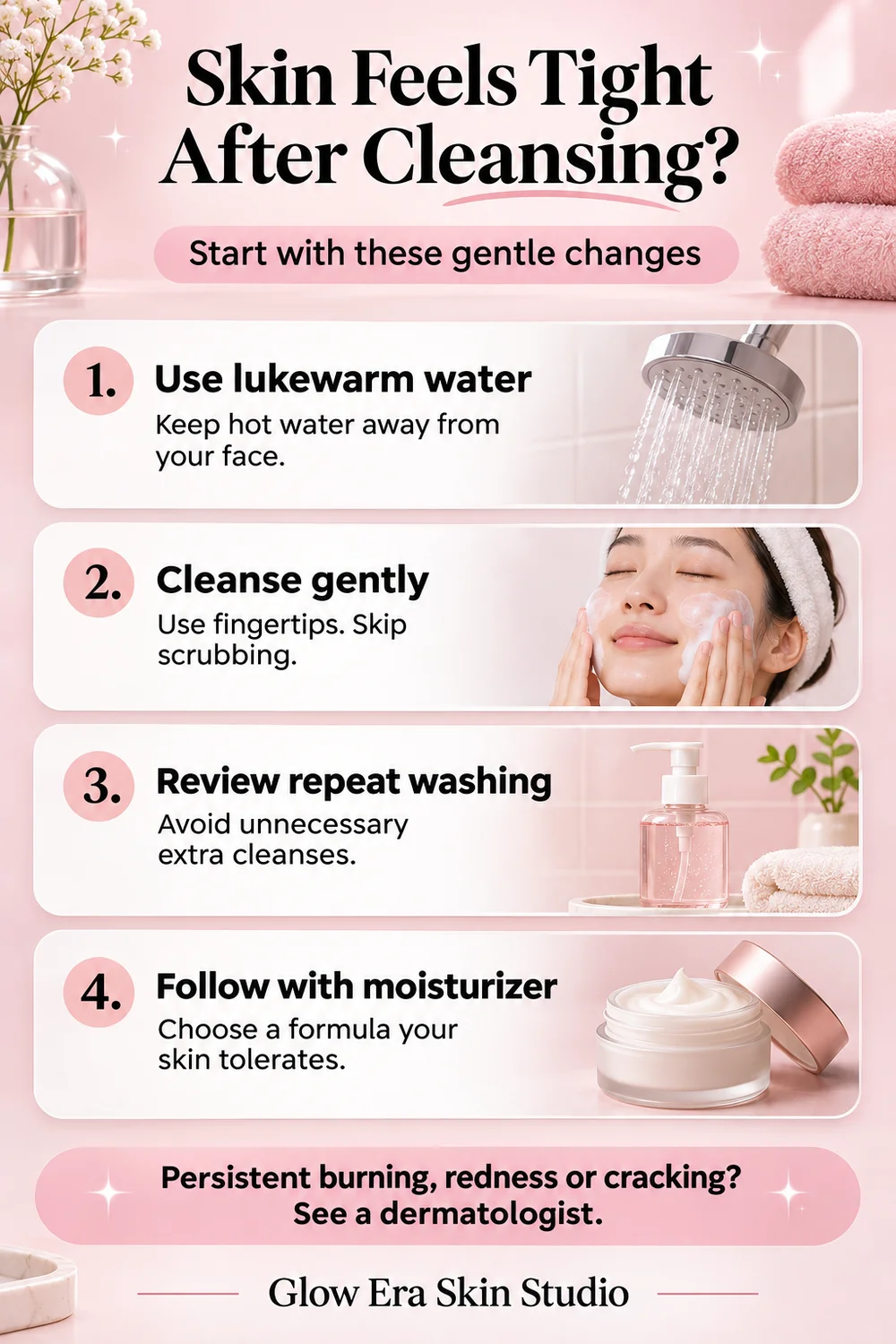
A simple way to troubleshoot your routine
Start by recording what you already use, including cleanser, treatment products, moisturizer, and sunscreen. Note when the tightness appears and whether anything stings.
Next, make the obvious gentle changes: use lukewarm water, stop scrubbing, and avoid unnecessary repeat washing. Keep the routine easy enough to follow consistently.
If your cleanser repeatedly leaves you uncomfortable, consider replacing it with a gentler option. Resist changing your cleanser, moisturizer, and every treatment on the same evening.
Changing one thing at a time makes it easier to understand what helps. A short note on your phone is enough; you do not need a complicated skincare tracker.
You can use my morning and night skincare routine as an example of how to organize steps, then adapt the structure to your skin.
Can oily skin feel tight after washing?
Yes. Surface shine does not mean your skin cannot also feel dry or irritated, and combination skin can have oily areas alongside dry patches.
For example, your nose may look shiny while your cheeks feel uncomfortable. Treating the whole face as though every area needs aggressive oil removal may miss that difference.
Choose products around comfort as well as shine. You do not need to chase a completely matte appearance at the expense of how your skin feels.
For more on that combination, see why oily skin still needs moisturizer. You can also review whether a morning cleanse suits your skin.
Does tightness mean I need a hydrating toner?
A toner is optional. Before adding another bottle, check whether your cleanser, water temperature, washing habits, and moisturizer already address the problem.
If you enjoy a toner and tolerate it, it can have a place in your routine. It should not be the step you rely on to compensate for a cleanser that leaves you uncomfortable.
When should you see a dermatologist?
Get advice if the tightness persists despite a gentle routine, especially with ongoing redness, itching, cracking, or burning. Those symptoms can have causes that a blog post cannot identify.
Tell your dermatologist if even moisturizer stings or hurts. Bring your product list so they can review the routine rather than guessing from one symptom.
The goal is comfortable, clean skin
Your face does not need to feel squeaky clean for your cleanser to have worked. Aim for a routine that removes what you wear and leaves your skin comfortable afterward.
Start with the simplest adjustment that fits what you have noticed. A calmer routine is often easier to maintain than a shelf full of products added in response to one uncomfortable feeling.
Looking for products to build a gentler routine? Browse the cleansers, moisturizers, and other skincare picks on my Amazon product list page. Explore my Amazon skincare picks here.
Sources
AAD: Face washing 101; AAD: Relieving dry skin; AAD: Moisturizer and acne treatments; DermNet: Skin barrier function; DermNet: Moisturizers.
This article provides general skincare education and does not replace individualized advice from a dermatologist.
Leave a Reply