

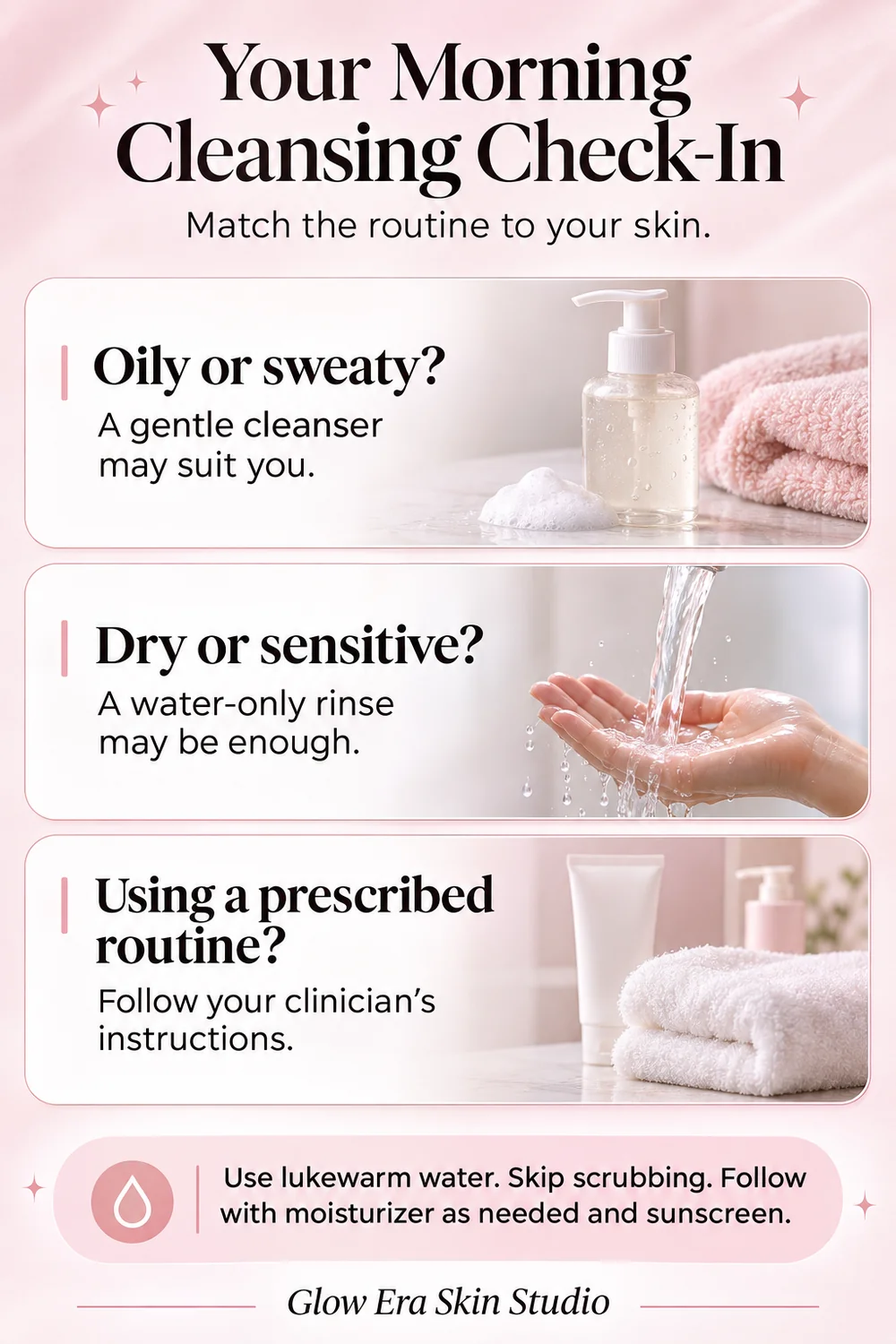
Many people benefit from a gentle morning cleanse, but dry or sensitive skin may do well with a water-only rinse. The best starting point depends on how your skin feels, whether you have been sweating, and any treatment instructions you follow.
I’m Jenn, I’m 40 years old, and Glow Era Skin Studio is where I share simple skincare routines and affordable favorites. After years of struggling with acne, I’m now happy with my skin.
I started sharing because I know how overwhelming skincare advice can feel. Even a small question, like whether to wash again in the morning, deserves a clear answer.

You do not have to choose between a long morning routine and doing nothing at all. A simple approach can still leave your face comfortable and ready for moisturizer and sunscreen.
If you already washed before bed, it is reasonable to wonder what another wash adds. Here is how to make that decision without turning the bathroom sink into another skincare debate.
What do dermatologists recommend?
The American Academy of Dermatology gives morning and evening washing, plus washing after sweating, as general guidance. It recommends gentle cleansing rather than scrubbing.
Cleveland Clinic dermatologist Kathryn Anderson, MD, also recommends twice-daily cleansing for many people. For dry or sensitive skin, she notes that water alone in the morning and cleanser at night may be an option.
A general recommendation is a starting point, not a reason to ignore irritation. If you have a prescribed routine, follow that plan and ask your clinician before changing medicated steps.
When a morning cleanser may be useful
Consider a gentle cleanser if you wake up with noticeable oiliness or sweat. Oily or acne-prone skin may suit morning and evening cleansing, provided the products are comfortable to use.
Think about your schedule too: a morning workout changes what your skin has been through. Washing after that session may make more sense than washing immediately before it and again soon afterward.
You do not need to make your face feel completely oil-free to finish the step. A little natural shine is different from an instruction to keep washing.
Notice whether your cleanser leaves you comfortable afterward. If you are rushing for moisturizer because your face feels stretched, review the product and technique instead of simply accepting that feeling.
If that happens often, read why your face feels tight after washing.
When a water-only rinse may suit you
If your skin tends to be dry or sensitive, consider whether a lukewarm rinse feels better than a second daily cleanser. This is an option to discuss with your dermatologist if you are uncertain.
Keep the comparison simple: use water gently, pat dry, and continue with the skincare you need. Avoid replacing cleanser with vigorous rubbing from a washcloth.
A water-only morning does not mean you should skip evening cleansing too. The products and buildup you need to remove at the end of the day are a separate consideration.
You also do not need to label yourself permanently as someone who “never cleanses in the morning.” Your routine can respond to a workout, changing weather, or a treatment plan.
What about combination skin?
Combination skin can make a yes-or-no rule feel unhelpful. Your forehead may look shiny while your cheeks feel uncomfortable after washing.
Start by noting which areas are bothering you and when. The answer may involve a gentler cleanser or a more suitable moisturizer, rather than adding another strong cleansing step.
Avoid choosing a harsh face wash solely because one area gets oily. You are applying the product to a face with more than one set of needs.
How to wash your face gently in the morning
Use lukewarm water and apply a gentle cleanser with your fingertips if you are cleansing. Rinse thoroughly, then pat with a soft towel instead of rubbing.
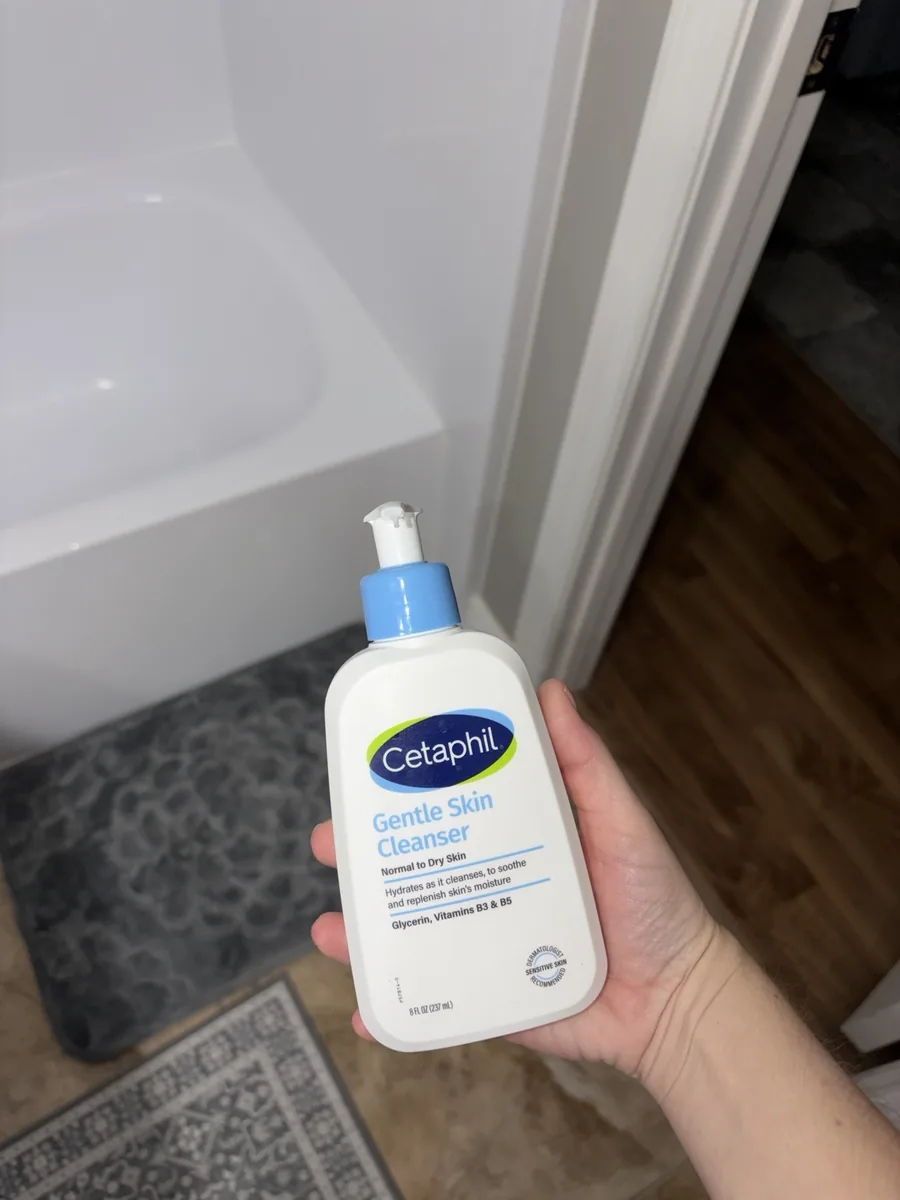
Follow the product directions, especially for a medicated wash. You do not need to copy a long massage routine just because someone online uses one.
More scrubbing does not make a morning wash more useful. Keep the technique simple enough that it works when you are getting ready for school, work, or an ordinary busy day.
If you already cleanse in the shower, count that as your wash. Returning to the sink for another cleanse does not automatically add a benefit.
Do you need to double cleanse in the morning?
Double cleansing does not need to be a default morning step. First ask what you are trying to remove and whether your existing gentle approach already does that.
An oil cleanser followed by a second wash may be useful in an evening routine for certain makeup or sunscreen. That does not mean you need to repeat the same process after sleeping.
For a closer look at that decision, read Double Cleansing 101. Keep the method tied to a purpose rather than adding it because it sounds more thorough.
What if you work out first thing?
Plan around the sweaty part of your morning. Dermatology guidance recommends washing after sweating, so think about where that fits before stacking several washes close together.
For example, if you wake up and head straight into a workout, make your post-workout wash the main cleansing step. You may not need a separate full cleanse minutes before exercising.
Sun protection still matters for outdoor exercise. Apply sunscreen as directed before going outside and follow its instructions for reapplication after sweating.
Do nighttime treatments mean you must scrub in the morning?
No. Having a treatment in your evening routine is not a reason to use harsh cleansing or extra friction when you wake up.
Check the instructions for the actual product you use. Some treatments have specific application or wash-off directions, and your prescriber’s advice should guide that part of the routine.
Do not change a prescribed skincare plan based on a general cleansing tip. If treatment has left your skin sore or unusually dry, ask how to adjust the supporting skincare.
What comes after your morning wash or rinse?
Use moisturizer if your skin needs it, and include sunscreen. If a moisturizing sunscreen provides enough comfort, a separate moisturizer underneath may be optional.
My guide to moisturizer for oily skin can help if you are weighing comfort against shine.
Choose broad-spectrum SPF 30 or higher and follow the label for amount, application timing, and reapplication. Shade and protective clothing also contribute to sun protection.
Keep optional steps optional. A toner or serum can be part of a routine you enjoy, but you do not need to fill every gap between cleansing and SPF.
You can see how I organize steps in my morning and night skincare routine. Use the order as a practical reference rather than assuming you need every product.
How to decide what works for your morning
Write down how your face feels on waking, after washing, and later in the morning. Keep the notes brief: comfortable, tight, oily, itchy, or stinging is enough.
If you are comparing a cleanser with a water-only rinse, keep the rest of your routine steady. That gives you a clearer observation than changing your cleanser, moisturizer, and treatments together.
Comfort and consistency are more useful than chasing a squeaky-clean feeling. Your routine should be something you can repeat without expecting irritation as the price of clean skin.
You do not have to finish the experiment with a rule for everyone else. Learning that one approach suits your face is enough.
When to ask for help
Persistent burning, itching, redness, or cracking deserves a dermatologist’s advice. If even gentle products sting, keep that information rather than assuming another cleanser will solve everything.
Bring a list of your skincare and treatment products to the appointment. That makes it easier to discuss what happens across the whole day.
Looking for simple products for your morning routine? Browse my Amazon product list page for cleansers, moisturizers, sunscreen, and other skincare picks organized by step.
Sources
AAD: Face washing 101; Cleveland Clinic: How often to wash your face; AAD: Oily skin care; AAD: Dry skin care; AAD: Applying sunscreen.
This article provides general skincare education and does not replace individualized advice from a dermatologist.
Leave a Reply